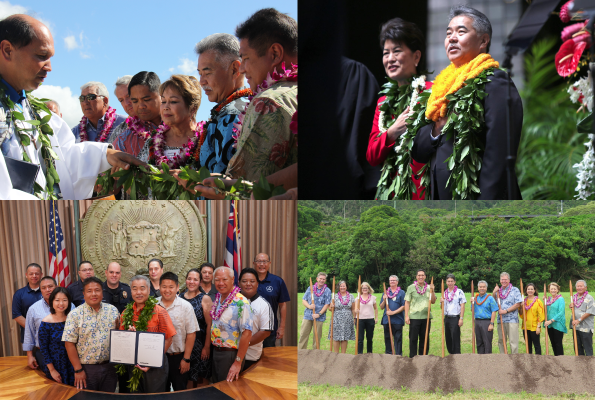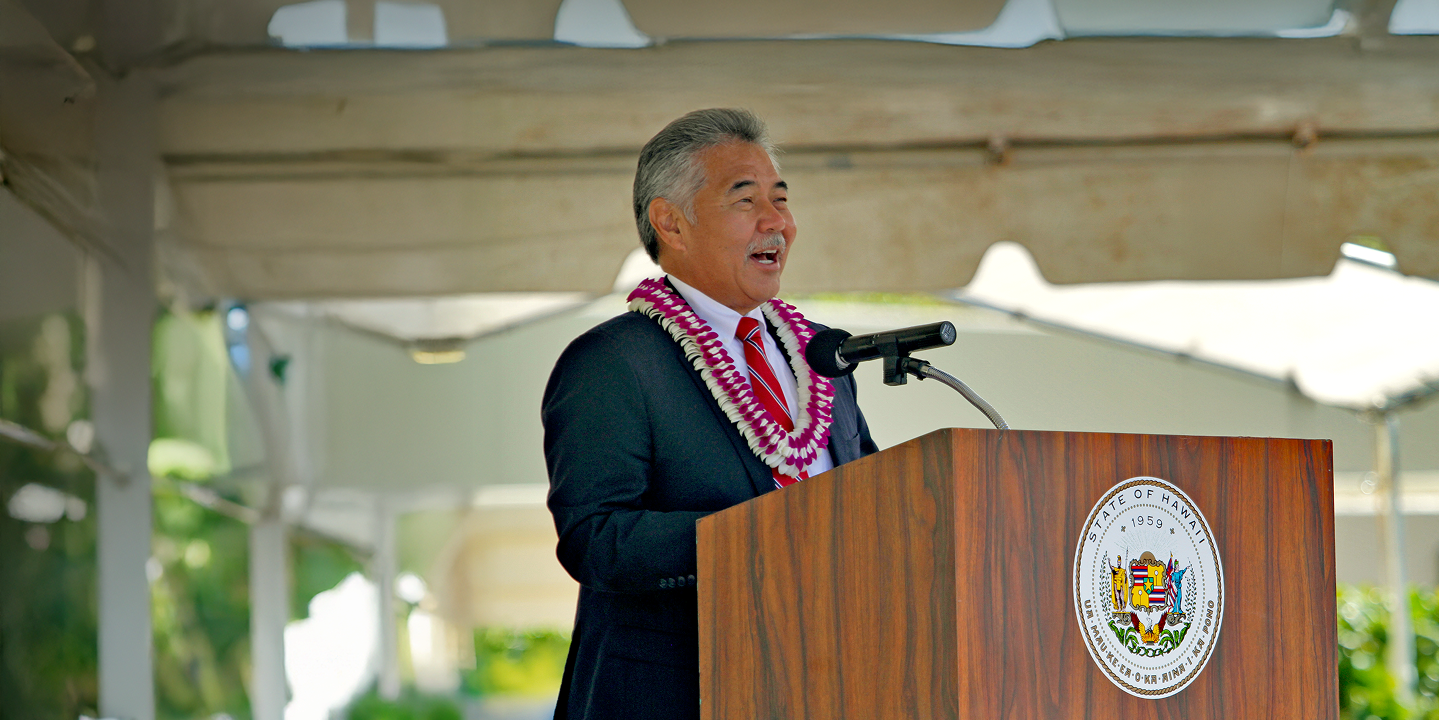
Born and raised in Pearl City, David Ige rose from a public school education to a career in engineering, business, and nearly 40 years of public service, including two terms as Hawaiʻi's eighth governor. Guided by fiscal responsibility and a commitment to community, he worked to strengthen the economy, invest in infrastructure, and create opportunities for a brighter future.
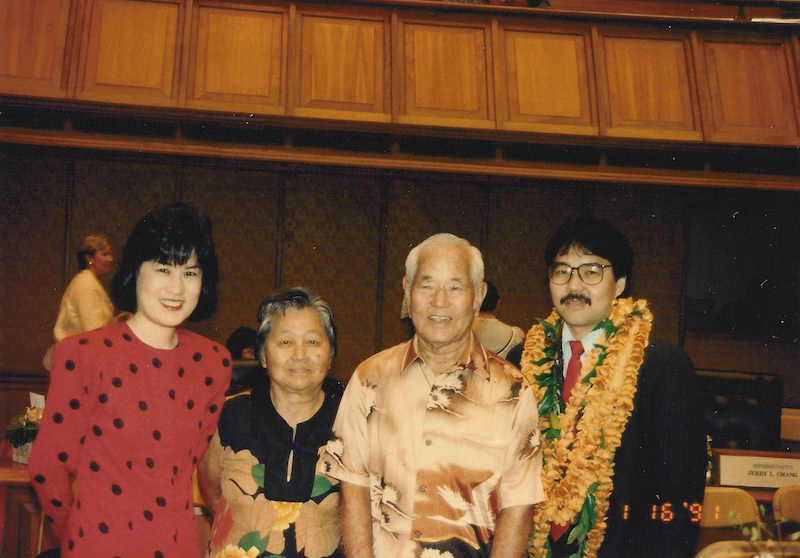
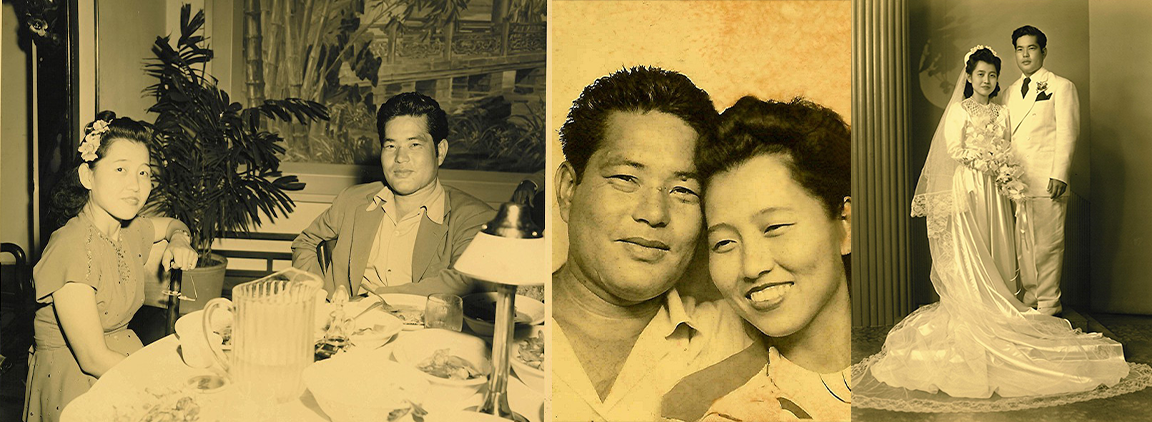
David Yutaka Ige was born on January 15, 1957, at 4:24 p.m. at St. Francis Hospital in Honolulu, Hawai‘i. He is the fifth of six boys born to Tokio Ige and Tsurue Ige (née Miota). His father, Tokio, was a steelworker who volunteered for the United States Army during World War II, serving in the 100th Battalion, 442nd Regimental Combat Team, and earning a Bronze Star and Purple Heart. His mother, Tsurue, was a registered nurse who later became a dental hygienist.
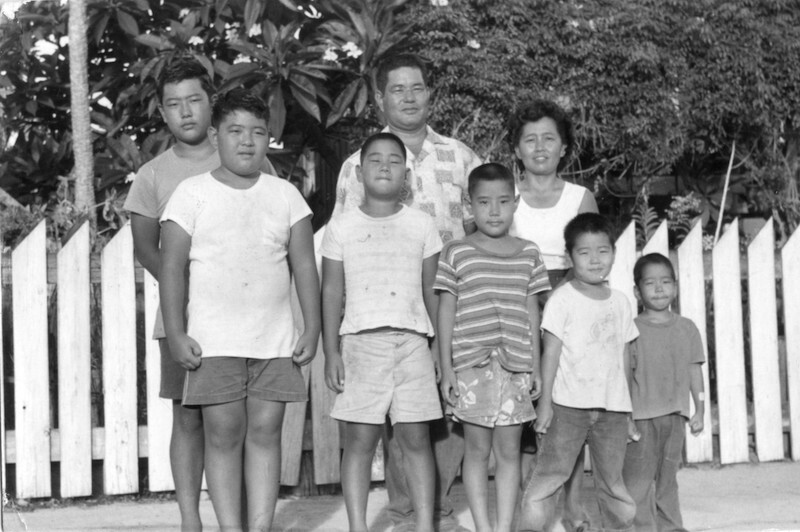
David grew up in Pearl City, Hawai‘i, and attended public schools there. He went to Pearl City Elementary School from 1962 to 1969, where he learned to play the ‘ukulele in the 4th grade and served as a lieutenant (5th grade) and then captain in the Junior Police Officer (JPO) program. He then attended Highlands Intermediate School from 1969 to 1971. From 1971 to 1975, David attended Pearl City High School, where he was part of the first class to attend for all four years and graduated as a member of the Class of 1975, ranking 5th in a class of over 500.
During high school, David was active in student government, serving as the first president of the Pearl City High School Band, student body vice-president in his junior year, and class president in his senior year. He also played on the Pearl City High School Boys Varsity Tennis team for three years, captaining the team in his senior year when they won the OIA Western Division Championship. In 1975, he received the Scholar-Athlete of the Year Award. As a high school student, he also earned college credits in calculus at Leeward Community College.
David's first job was at the Del Monte Pineapple Cannery in Honolulu, working there during the summers of 1973, 1974, and 1975, starting at $1.60 per hour.
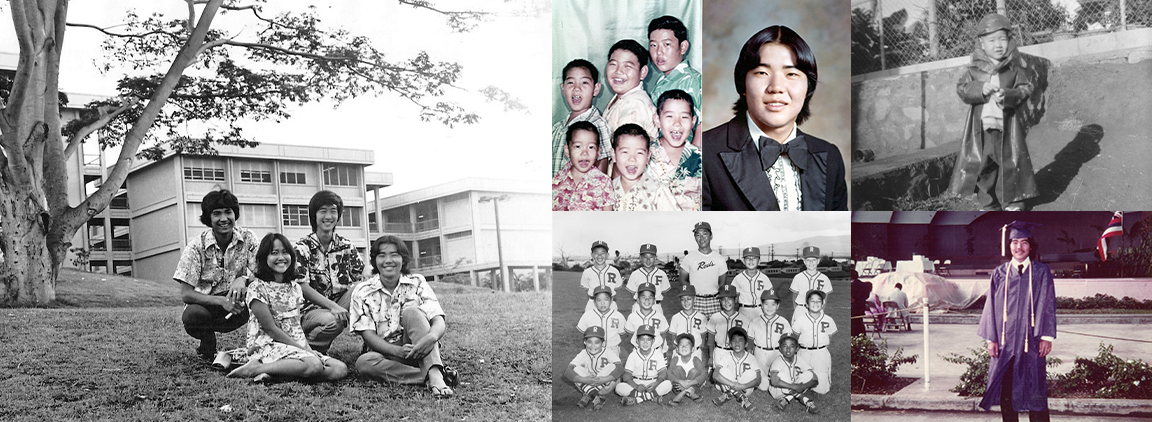
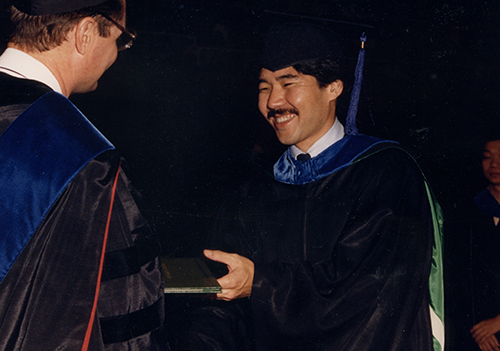
He was accepted into several mainland colleges, including the Massachusetts Institute of Technology, Illinois Institute of Technology, and Harvey Mudd, but chose to attend the University of Hawai‘i at Mānoa. He graduated in May 1979 with a Bachelor of Science in Electrical Engineering.
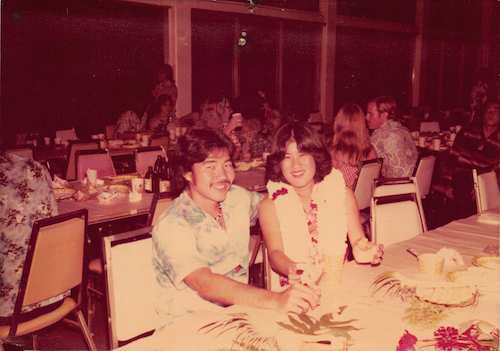
While at the university, he was active in student government, elected as secretary of the Associated Students of the University of Hawaiʻi (ASUH), and served as an officer in several other student organizations.
It was during the campaign for ASUH offices, that David met Dawn Amano, who would become his future wife.
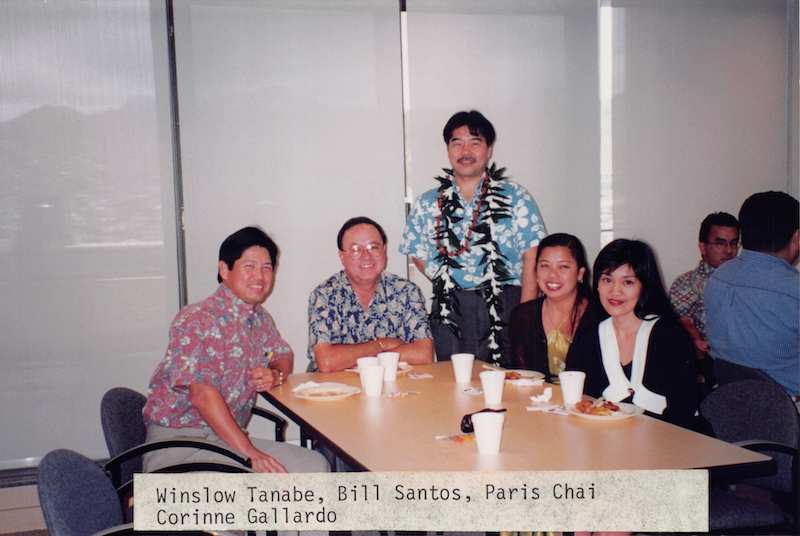
In June 1979, with 41 job offers from major technology companies across the country, David accepted a position with Pacific Analysis Corporation in Honolulu, focusing on renewable energy and advanced decision support systems. In December 1981, he joined GTE Hawaiian Tel as an engineer. While working at GTE, he pursued a Master of Business Administration (EMBA) in decision sciences at the University of Hawaiʻi at Mānoa. completing his degree in December 1985. In 1986, Hawaiʻi Business Magazine recognized him as one of the university's Top 10 MBA students.
After working for GTE Hawaiian Tel (which became Verizon Hawaii) for 18 years, he took an early retirement. In August 1999, he joined Pihana Pacific as project manager, which established the first world-class data center and carrier-neutral Internet exchange in Hawai‘i and the Pacific.
David Ige also worked as Vice President of engineering at NetEnterprise, and as project manager with Robert A. Ige and Associates, Inc.
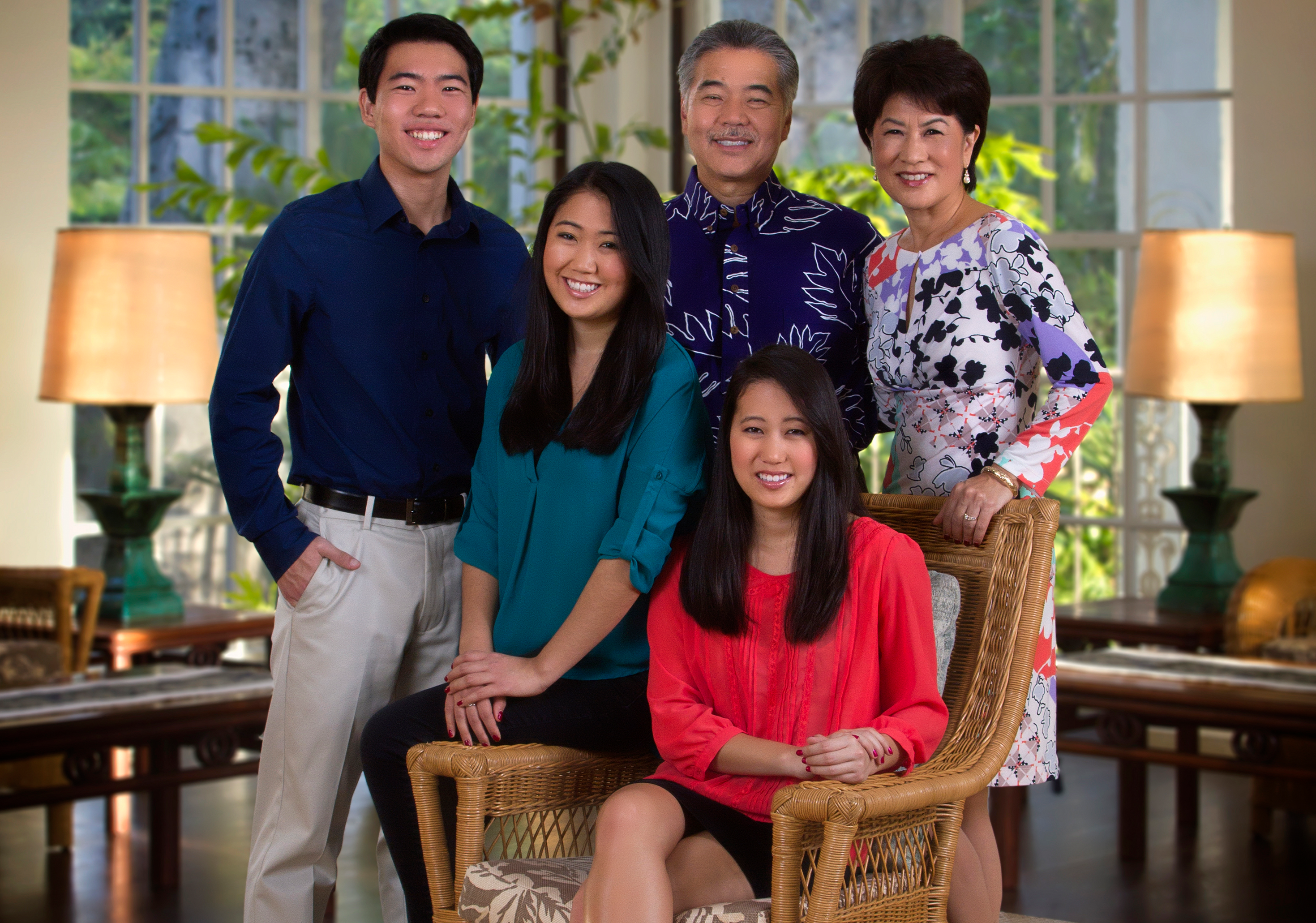
On July 3, 1982 David Ige and Dawn Amano were married in a ceremony at ‘Ewa Community Church, which is the church that Dawn attended during her childhood. They have three children, Lauren, Amy, and Matthew.

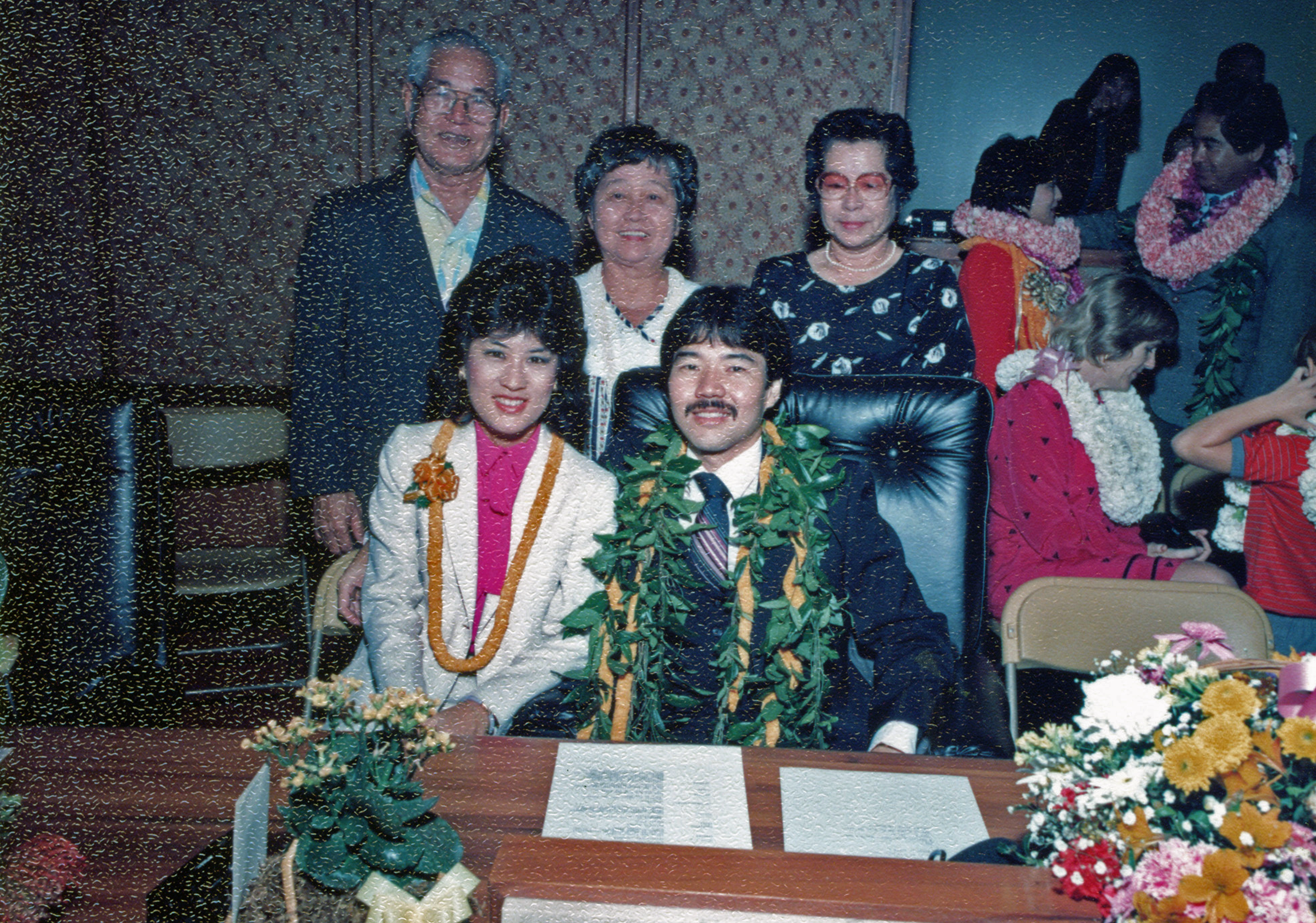
On December 2, 1985, Governor George Ariyoshi appointed David Ige to the Hawai‘i House of Representatives after Rep. Arnold Morgado resigned. He was re-elected in 1986 and served until 1994.
During his time as a representative, he supported public Hawaiian language immersion schools, with Waiau Elementary School in his district becoming one of the first. His legislative efforts focused on public education reform, charter schools, information technology, and telecommunications policy. He co-authored the Hawai‘i Telecommunications and Information Industries Act, which established the state information network and created the Hawai‘i Information Network Corporation. He also worked on diversifying Hawai‘i's economy, establishing seed capital and venture capital programs, software development initiatives, and technology transfer programs. Ige was part of the inaugural 1997 class of the Pacific Century Fellows. He is also considered a co-founder of the Hawai‘i State Legislature's website, alongside Sen. Les Ihara, Jr. and Sen. Carol Fukunaga, for his role in establishing online access to legislative information.
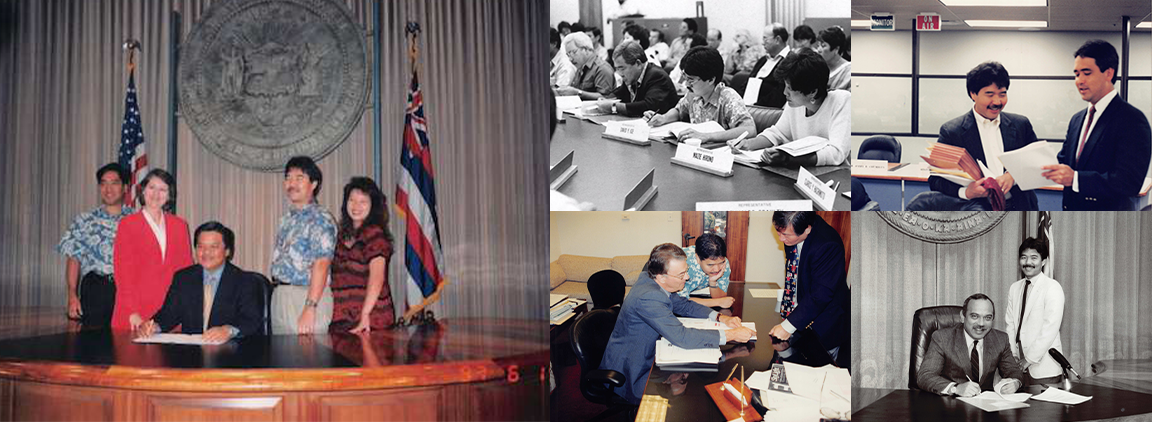
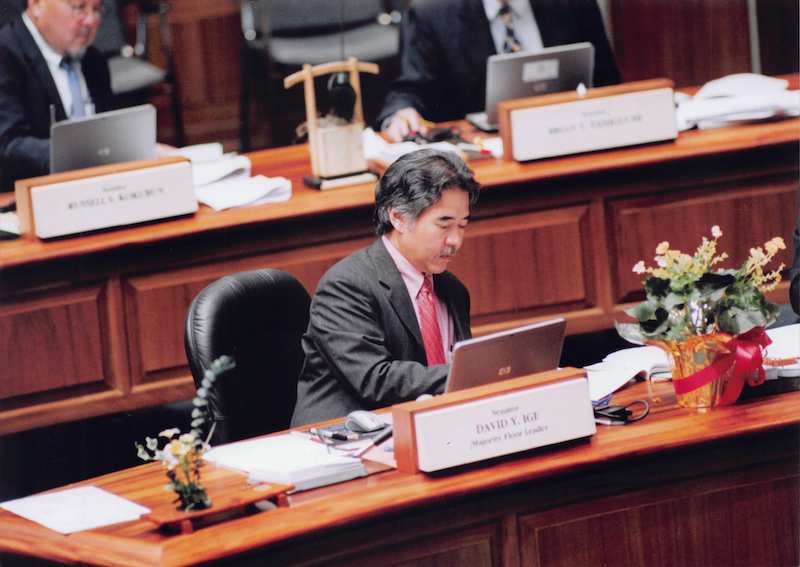
In 1994, David Ige successfully ran for the Hawai‘i State Senate, where he served for 20 years. He chaired several committees, including Ways and Means, Health, Commerce and Consumer Protection, Education, and Economic Development and Technology. His legislative accomplishments as a senator include reforming auto insurance in 1997, which led to the largest reduction in auto insurance premiums in the country. In 2013, he championed Hawai‘i's Other Post-Employment Benefits (OPEB) pre-funding law (Act 268) to address the state's unfunded retiree healthcare liability, shifting to a pre-funded model and establishing a 30-year payment schedule. In 2014, he secured $40 million for a conservation easement to prevent development at Turtle Bay on Oʻahu.
In 2008, Senator Ige initiated the Paperless Initiative, aiming to enhance public access to the legislative process through electronic documents and reduce paper waste. This initiative significantly cut the Senate's paper usage by 80 percent, from 8.3 million pages in 2007 to 1.5 million pages in 2010, saving half a million dollars in paper and copy machine expenses over three years. In recognition of these efforts, the National Association of State Chief Information Officers (NASCIO) awarded Sen. David Ige the first-ever State Technology Innovator Award in 2010.
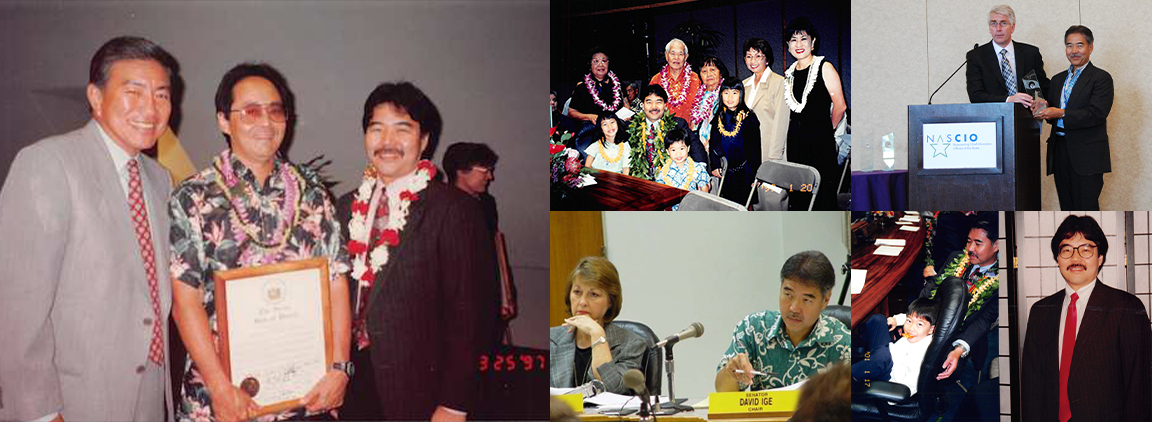
This timeline of the Ige administration captures just some of the historic milestones and events during the governor’s two terms and highlights the progress made in important areas statewide. From steadfast leadership during a historic global pandemic to decisive responses to multiple natural disasters, Governor Ige and his team made the safety and well-being of the people of Hawai‘i their top priority and worked to lay a solid foundation for the future.