
Working Together on the Road to Home
Understanding the Challenge
For six years prior to the election of Governor David Ige, the homelessness crisis was building and growing in Hawai‘i. From September 2014 to February 15, 2015 the number of tents in the Kaka‘ako Waterfront area almost doubled from 76 to 121. Law enforcement sweeps of homeless encampments and focused efforts to clean up Waikīkī and the surrounding tourist mecca caused the Kaka‘ako encampment to double again to 293 tents by August 2015. With no coordinated strategy and limited resources, the growing homelessness challenge became a top priority for action by the Ige Administration.
The Governor’s Record of Leadership
As the homelessness crisis grew and expanded in 2015, Governor Ige knew that only a coordinated effort by state, county, and federal partners and an all-of-community focus could stem the tide of homelessness.
In July 2015 Governor Ige created the Leadership Team on Homelessness. It included the governor, the mayor and the city council chair of the City and County of Honolulu, state legislators, and representatives of the Congressional delegation.
Together the Leadership Team on Homelessness identified and assigned parcels of land to be used for the creation of temporary shelters; implemented measures to transition residents of homeless encampments to shelters; worked with service providers to establish protocols to assess shelter residents for financial, physical, mental health and other needs; and determined costs and obtained funding to meet these objectives. Law enforcement leaders, non-profit organizations and other interested parties were consulted in working together to find solutions.
Governor Ige's administration employed several key leadership strategies to reduce homelessness in Hawai‘i:
- Establishing a Governor's Leadership Team on Homelessness: This was a direct action by Governor Ige in July 2015, demonstrating a top-down commitment to addressing the issue. The team's clear mandate was to identify land for shelters, facilitate transfers to shelters, assess needs, and secure funding. (Source: Homelessness.pdf, page 162)
- Appointing a dedicated Coordinator on Homelessness (GCH): Scott Morishige was appointed in August 2015, providing a central point of leadership and coordination for state-level efforts. (Source: Homelessness.pdf, page 164) The position was later formally established in statute by Act 81, SLH 2019, signifying a long-term commitment. (Source: HICH-Report-to-2022-Legislature-FINAL.pdf, page 2)
- Issuing Emergency Proclamations: Governor Ige utilized emergency powers to expedite funding and program development, demonstrating a sense of urgency and direct intervention. (Source: Homelessness.pdf, page 164)
- Interagency and Cross-Sector Partnerships: Governor Ige explicitly stated, "I've brought together state, county and federal agencies to take action" on homelessness. (Source: JAN final Capitol Connection.pdf, page 1) This included partnerships with law enforcement (HPD's HELP Honolulu Project), departments like HDOT (Homeless Coordinator position, property storage protocols), and health (DOH, DHS, BHHSURG). (Source: Homelessness.pdf, page 164-165)
- Engagement with Private Sector and Counties: The administration recognized that solving the housing shortage "can only be solved by partnering with the private sector and the counties." (Source: MAYFINAL Capitol Connection.pdf, page 1)
- "One-stop" service centers: The Kaneohe Joint Outreach Center (KJOC) is an example of consolidating services through collaboration. (Source: HICH-Report-to-2020-Legislature.pdf, page 7)
- Increased Funding: The Legislature appropriated significant funds ($12 million in 2016) specifically for homeless services, including outreach, Housing First, and Rapid Rehousing. (Source: Homelessness.pdf, page 164)
- Innovative Programs: This included the Coordinated Statewide Homelessness Initiative (CSHI), the ʻOhana Zones Pilot Program (with $30 million appropriation), and the Law Enforcement Assisted Diversion (LEAD) Program. (Source: Homelessness.pdf, page 164-165)
- Leveraging Existing Resources: The Hawaiʻi Public Housing Authority (HPHA) increased its rent supplement program and created a temporary Special Rent Supplement Program (SRSP). (Source: Homelessness.pdf, page 164)
- Fiscal Mapping: Initiating a fiscal mapping of government-funded homeless services in 2021 indicates a strategic effort to understand and optimize resource allocation. (Source: Policy-Brief-Fiscal-Mapping-02-17-22.pdf, page 1)
- Utilizing Point in Time (PIT) Count Data: The consistent reference to PIT count data (e.g., 25% decrease in overall homelessness between 2016 and 2022) indicates that performance was monitored and reported. (Source: Homelessness.pdf, page 163)
- Developing Performance Metrics: DHS and GCH developed performance metrics and outcome standards for homeless service contracts, promoting accountability among service providers. (Source: Homelessness.pdf, page 164)
- Focus on Affordable Housing: Governor Ige consistently linked homelessness to the lack of affordable housing and prioritized initiatives to increase affordable housing units. (Source: 3MAY 2017 FINAL Capitol Connection.pdf, page 1; MAYFINAL Capitol Connection.pdf, page 1)
- Targeting Specific Populations: Initiatives like the Family Assessment Center and advocacy for homeless minors (Act 23, SLH 2021) show a focus on specific vulnerable groups. (Source: Homelessness.pdf, page 164; HICH-Report-to-2022-Legislature-FINAL.pdf, page 2)
- Healthcare Integration: The Medicaid waiver amendment for tenancy support services and the Kāneʻohe Joint Outreach Center demonstrate an understanding of the link between health and homelessness. (Source: Homelessness.pdf, page 165)
- "The Road to Home" Radio Segment: This initiative aimed to increase public awareness and understanding of homelessness. (Source: Homelessness.pdf, page 164)
- Consistent messaging in newsletters: Governor Ige's "Capitol Connection" newsletters frequently highlighted progress on housing and homelessness. (e.g., 3MAY 2017 FINAL Capitol Connection.pdf, JAN final Capitol Connection.pdf)
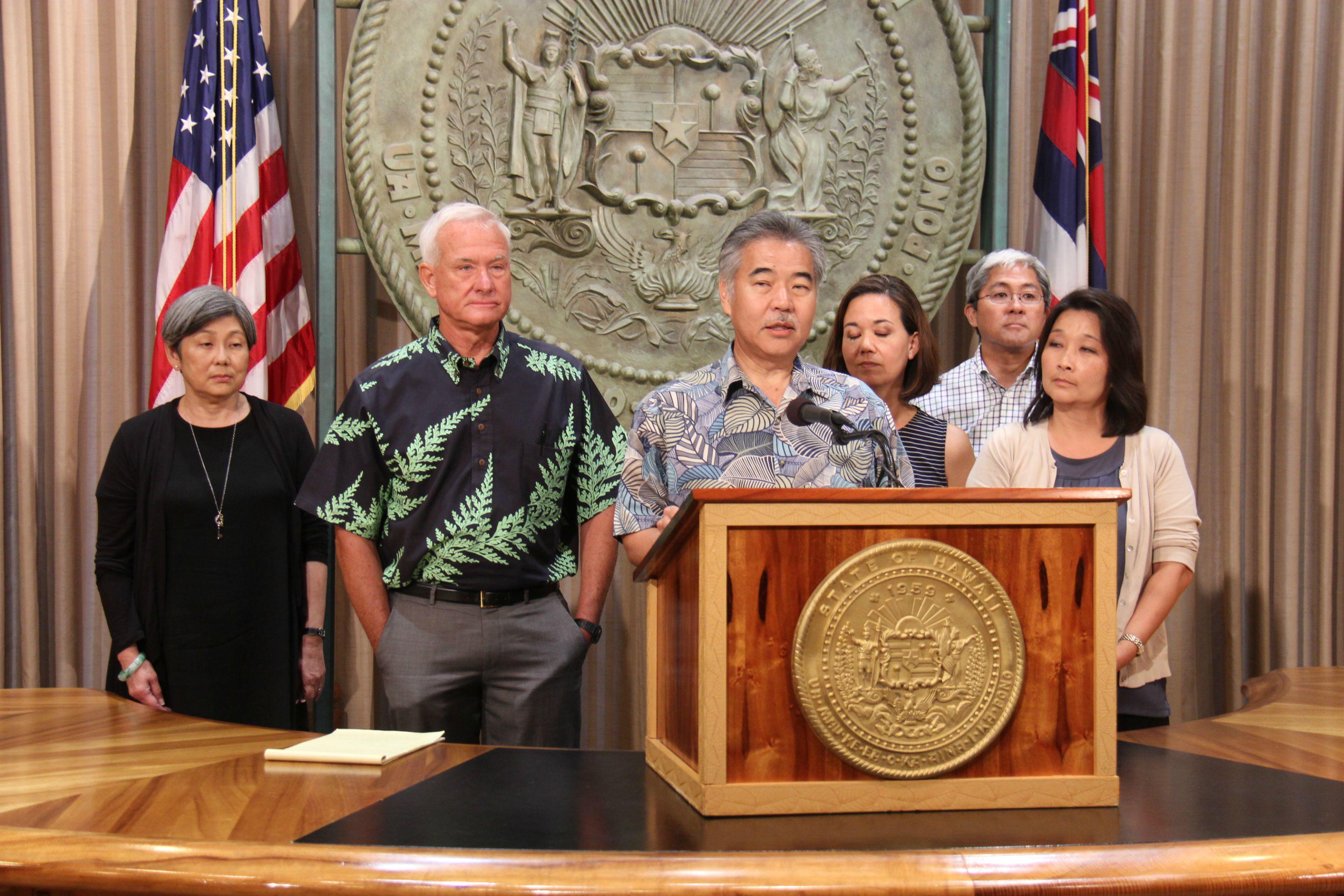
Investing in families, improving government efficiency, and ensuring that the community comes first were priorities for Governor Ige.
With that in mind, the State’s long-term framework to address homelessness is based upon the multi-generational ‘Ohana Nui approach that invests early in children and families to improve health, education, employment, and other outcomes.
‘Ohana Nui is designed to address the root causes or social determinants of health, which include healthcare, education, safety, living/work environments, and housing. In alignment with ‘Ohana Nui, the State strategically presses on the following three levers to address homelessness:
- Affordable Housing: Build more permanent housing and maximize the use of rental subsidies and vouchers to better utilize existing inventory.
- Health & Human Services: Implement services that emphasize permanent housing placement and appropriate health, mental health, and substance abuse support services.
- Public Safety: Maintain safety in public spaces for all members of the community. When unsheltered persons are encountered, ensure they are quickly connected to housing and human services.