
Leading Hawaiʻi towards a Sustainable Future
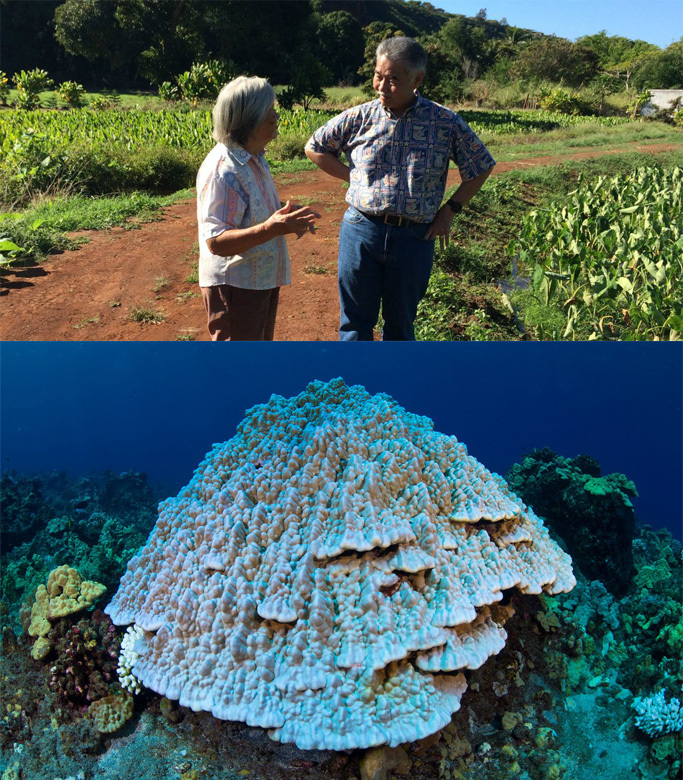
As an island community in the middle of the Pacific Ocean, we see the impacts of climate change and global warming first, by experiencing more frequent and intense events. Sea level rise has accelerated coastal erosion. Rising ocean temperatures have increased the number of coral bleaching events. Severe droughts have become more common and occur in both the wet and dry seasons, affecting all five major islands. Every year, we see increased wildfire risk as invasive grasses and shrubs have taken over unmanaged lands and provide flammable fuel for any spark to ignite. We are seeing more intense storms and rain bombs, and more severe hurricanes approaching the islands.
We all learned from those who came before us, that we have a kuleana (responsibility) to care for our land and natural resources. We are committed to leaving a better, cleaner, more sustainable Hawaiʻi than when we first came into office.
From the Front Lines

"The governor is focused on solving real problems now with deeper structural changes...We're looking not only for the short-term fixes, but also long-term transformational benefits."

"Governor Ige's actions to protect our environment have brought a huge focus to these issues --- especially at a time when the federal government seems to be abandoning these commitments."
"The governor's Sustainable Hawai'i Initiative tackles the issues facing our forests and reefs, biosecurity, local food production and renewable energy and sets achievable goals...The important thing is we're coming to grips with this now and turning this huge threat of climate change into action. It will strengthen our state's resolve to do our part in reducing greenhouse gas emissions and set an example for larger states."
“I’m very proud that, with the governor’s leadership and support, we’ve been able to make significant progress,”
The Governor’s Record of Leadership
Governor Ige realized there are no super heroes coming to save Planet Earth. We cannot wait for others, we must lead by example to do all that we can to fight climate change.
In essence, Governor Ige's strategy involved a holistic and integrated approach to sustainability and climate change, combining ambitious goals, collaborative action, long-term planning, and a strong commitment to community engagement and environmental protection.
His strategy included:
He positioned Hawaiʻi as a global leader in sustainability and climate change action, drawing attention to the state's unique challenges and innovative solutions.
He recognized the reality and urgency of climate change impacts, such as sea-level rise, coral bleaching, and marine debris, and took concrete steps to address these issues.
He sought to find a balance between conservation efforts and economic growth, recognizing the need to protect resources while also supporting the state's economy.
He believed in working with the community, state agencies, and other partners to achieve sustainability goals and protect resources. He emphasized collaboration and a "team" approach and incorporated native Hawaiian knowledge and cultural practices as appropriate.
He focused on long-term planning for the future, recognizing that decisions made today would impact future generations. This included planning for food production, sustainability, and adapting to climate change impacts.
He aimed to restore public trust in government by making decisions in the public interest and ensuring accountability.
He sought to ensure that the benefits of sustainability efforts were available to all, focusing on equity and accessibility in areas such as renewable energy and housing.
He emphasized building more resilient communities to withstand the challenges of climate change and natural disasters.
Native Hawaiian culture emphasizes a deep connection to the land and the principle of aloha ʻāina (love of the land). Traditional Hawaiian knowledge and practices have long focused on sustainable resource management and maintaining a balanced relationship with the environment.
- Launched the Sustainable Hawaiʻi Initiative in 2016 to protect our critical native forests and watersheds and our near shore ocean waters, transition to clean 100% renewable energy for electricity, double local food production, and implement an interagency biosecurity plan to keep invasive species out of the islands.
- Addressed issues like sea-level rise, coral bleaching, and marine debris.
- Ensured partnerships statewide are working to protect endangered species and natural resources and planning for the future.
- Created an Interagency Climate Adaptation Committee to develop planning guidelines for environmental impacts.
- Published the Hawai'i Climate Commission's statewide report to give a visual sense of sea-level rise impacts on communities.
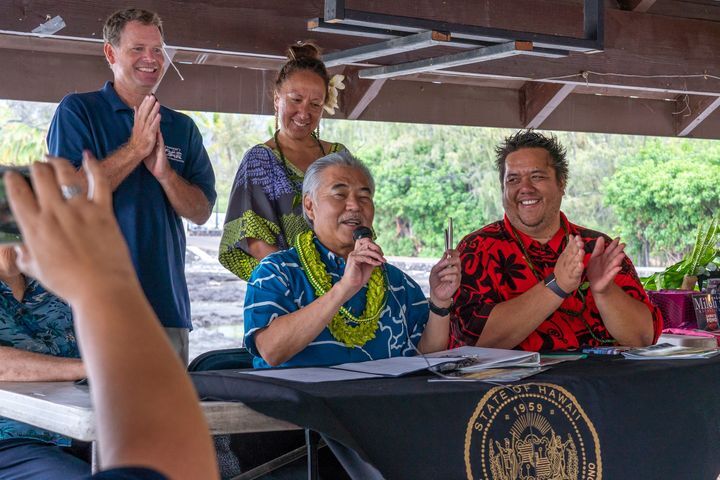
- Established the Community-Based Subsistence Fishing Area in Hāʻena.
- Established the Community-Based Subsistence Fishing Area in Miloliʻi.
- Added the Office of Hawaiian Affairs to be a Co-Trustee of the Papahānaumokuākea Marine National Monument.
- Issued 23 permits for the restoration of Native Hawaiian fishponds around the State.
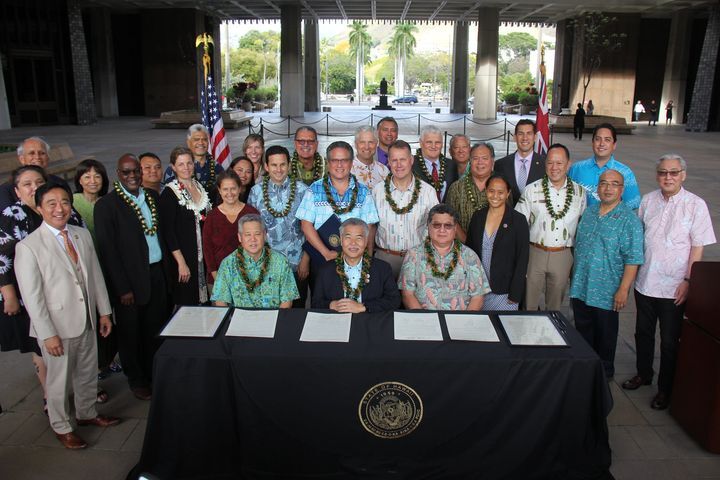
- In 2015, signed into law the goal of generating 100 percent of electricity sales from renewable resources by 2045, the first in the nation.
- Doubled Hawaiʻi's renewable energy for electricity from 20% to 40% in eight years.
- Moving from the most oil-dependent state in the country to one of the greenest.
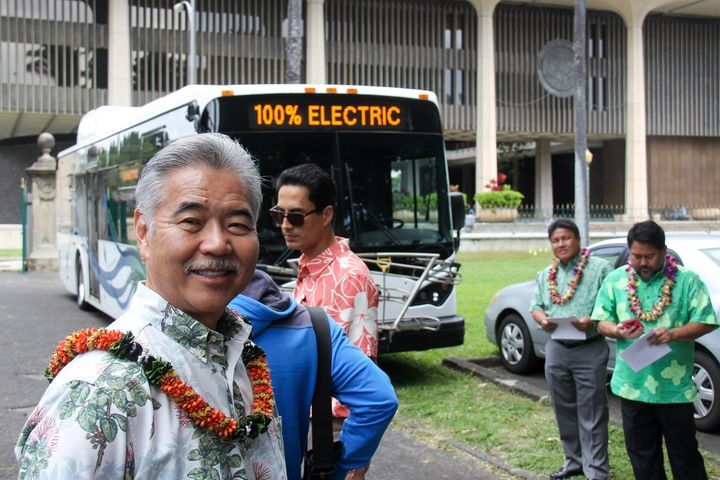
- Reduced the carbon footprint of transportation.
- In 2015, the Hawaiʻi Department of Transportation (HDOT) executed a 20-year energy savings contract to reduce energy use by installing energy-efficient systems and photovoltaic panels.
- Replaced light fixtures with high-efficiency Light Emitting Diode (LED) equipment, resulting in a 43.4 percent improvement in annual energy use by HDOT Highways.
- In 2022, closed the last utility-scale powerplant in Hawaiʻi burning coal.