
Community Response and Recovery After Kaua‘i and O‘ahu Flood
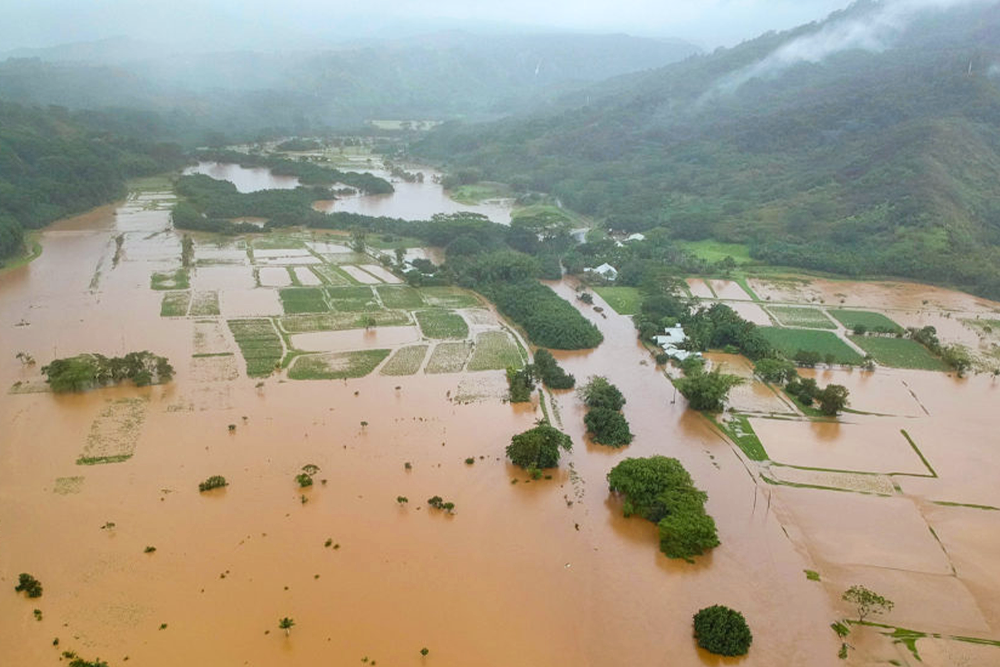
In April 2018, the islands of Kaua‘i and O‘ahu experienced a series of severe thunderstorms and torrential rainfall, leading to widespread and destructive flooding, particularly on the north shore of Kaua‘i and in the eastern part of O‘ahu. This event resulted in significant damage to homes and infrastructure, and set a new national record for 24-hour rainfall totals.
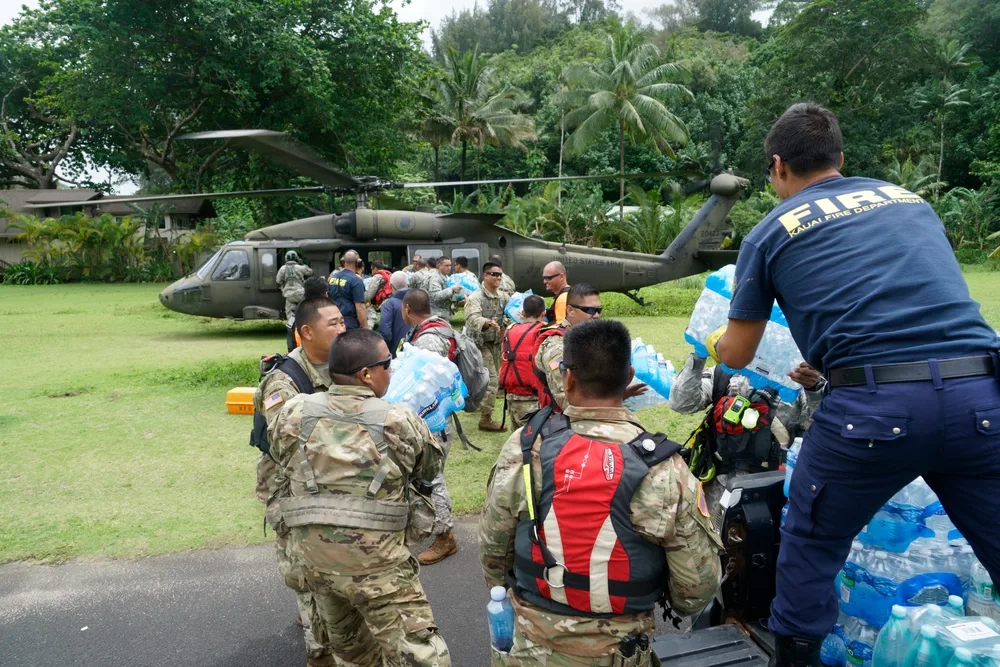
From Hāʻena, Wainiha, Hanalei and Kōloa on Kaua‘i to Waimānalo and Niu Valley on O‘ahu, the scenes were devastating: flooded homes, businesses and farmlands with knee-deep mud and floating debris everywhere. In the hardest hit areas on Kaua‘i, residents and visitors boarded Hawai‘i Air National Guard, Army and county helicopters to evacuate since many places were isolated by landslides and left without electricity and water after the storm.
Governor Ige issued emergency proclamations for Kaua‘i and O‘ahu so state monies could be appropriated for speedy, efficient relief of damages. The governor and Kaua‘i Mayor Bernard Carvalho, along with military and county emergency crews, surveyed damaged areas in the Hanalei area by helicopter immediately after the storm
“We are mobilizing state assets to get people the help they need,” said the governor. He said the state is working with the Federal Emergency Management Agency to assess damages. On May 2, 2018, Governor Ige sent a request for a Presidential Major Disaster Declaration for the Kaua‘i and O‘ahu flooding, which was quickly approved.
Most Destructive Storm Since Hurricane Iniki in 1992
Northern Kaua‘i recorded the highest 24-hour rainfall total in U.S. history, with 49.69 inches falling at the Waipā Foundation rain gauge near Hanalei. The heavy rains triggered severe flash flooding and numerous landslides, especially in the north and east regions of Kaua‘i. More than 900 tons of debris covered O‘ahu roads as well as inside homes. Over 532 homes were damaged or destroyed on Kaua‘i and O‘ahu. Landslides cut off road access to communities like Wainiha and Hāʻena for extended periods. Evacuations and relief efforts often relied on helicopters and boats due to blocked roads.
Public infrastructure sustained significant damage, estimated at over $125 million, including nearly $100 million on Kaua‘i alone. Federal disaster assistance was approved, and recovery efforts involved road and bridge repairs, shelter operations, and community support.
Despite the severity of the flooding and damage, fortunately, no deaths or serious injuries were reported during this event.
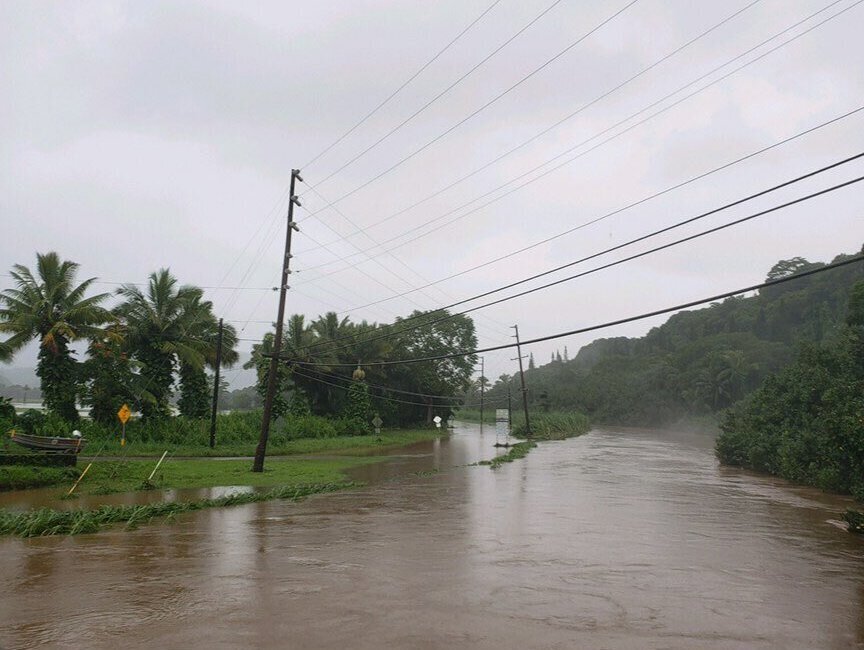
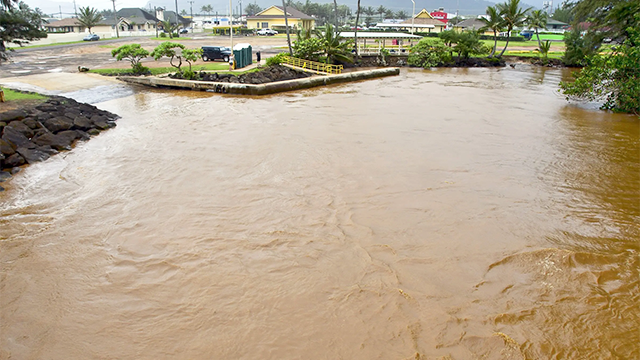
- Northern Kaua‘i experienced the brunt of the rainfall, with the Waipā Foundation rain gauge near Hanalei recording an astounding 49.69 inches (1,262 mm) in a 24-hour period (April 14-15), setting a new U.S. record.
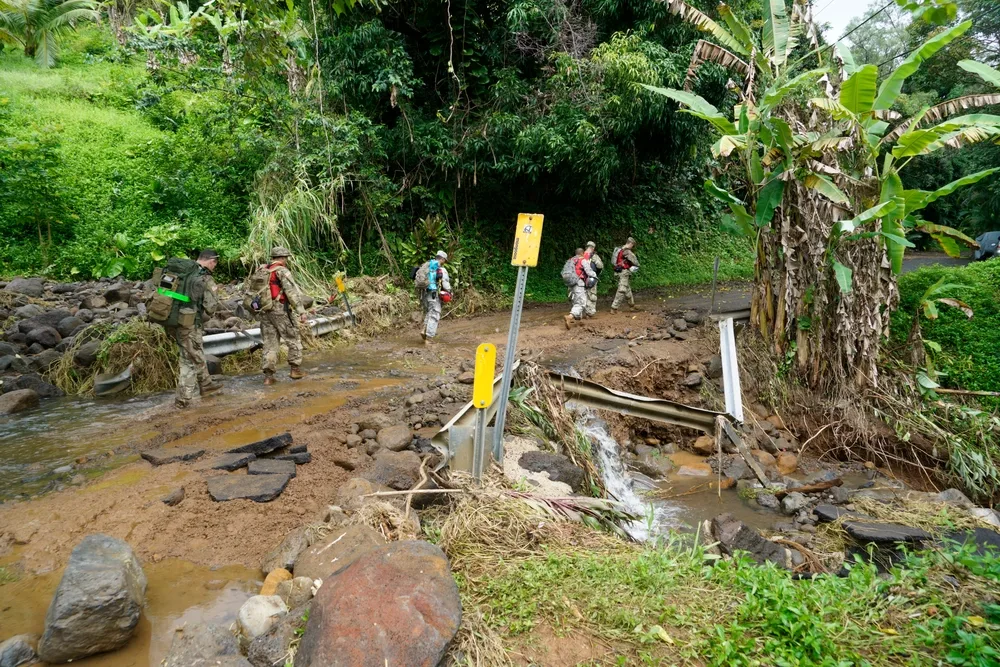
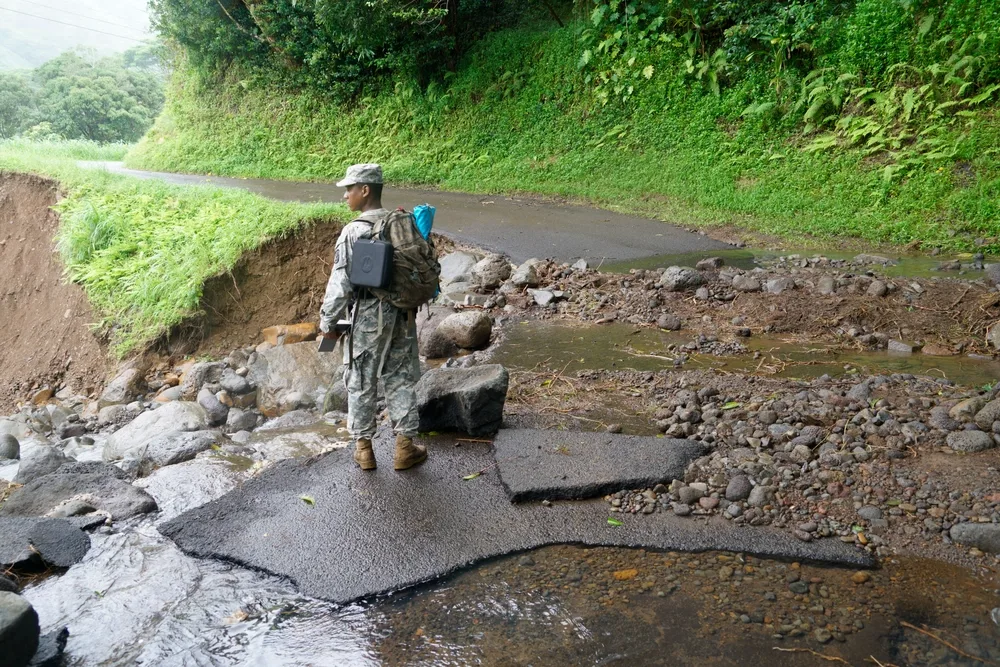
- The deluge resulted in widespread flash flooding and landslides. There were 12 landslides on Kūhiō Highway in a two-mile stretch in Wainiha and Hāʻena, which cut off road access for several weeks.
- Kūhiō Highway suffered structural damage, which restricted vehicle access to the Hanalei, Wainiha, and Hāʻena communities for months.
- Over 350 homes were damaged or destroyed.
- Initial damage estimates topped $100 million.
- The event was the worst natural disaster to affect Kaua‘i since Hurricane Iniki in 1992.
- Scientific analysis later attributed the record-setting rainfall to severe supercell thunderstorms, triggered by shifting winds colliding with Kaua‘i's steep cliffs.
O‘ahu's localized flooding
- Eastern O‘ahu also experienced significant, though more localized, heavy rainfall from April 13 through April 15, 2018.
- Niu Valley was among the hardest-hit areas, with rain gauges recording rainfall rates of about 4 inches (100 mm) per hour and over 5.5 inches (140 mm) over a two-hour period.
- More than 280 homes were damaged or destroyed.
- More than 600 tons of debris covered O‘ahu roads.
- More than 330 tons of additional household waste and appliances were removed.
- Flooding submerged cars and inundated hundreds of homes in affected areas.
- Heavy runoff left roads covered in debris, including a portion of Kalaniana‘ole Highway that was nearly a foot under water.
- Emergency crews conducted rescues by helicopter, boat, and bus, rescuing 475 people by helicopter alone.
- The Hawai‘i Department of Transportation used convoys to facilitate access along damaged portions of Kūhiō Highway while repairs were underway.
- Reconstruction costs for the highway were estimated at $100 million, with a significant portion covered by federal assistance.
- Governor David Ige issued multiple emergency proclamations to provide relief and access to funding for recovery efforts.
- President Donald Trump declared a federal disaster area, enabling the Federal Emergency Management Agency (FEMA) to provide both public and individual assistance to the affected counties.
- FEMA approved over $1.5 million in individual and household assistance and $2.6 million in public assistance grants.
This event served as a powerful reminder of the vulnerability of the Hawaiian Islands to the destructive power of flash floods and the importance of emergency preparedness and recovery strategies.
The Hawai‘i National Guard (HING) played a crucial role in the aftermath of the 2018 Kaua‘i and O‘ahu floods, contributing significantly to search, rescue, and recovery efforts.
Here's a breakdown of their involvement:
HING personnel, including a Search and Rescue team (part of the Chemical Biological Radiological Nuclear Enhanced Response Force Package or CERFP Team), provided reconnaissance and ground support in the heavily damaged areas of Kaua‘i, like Wainiha Valley.
They were airlifted by UH-60 Black Hawks to access remote locations, helping locate and assist stranded individuals.
HING also conducted water search and rescue with their CERFP swift water technicians using Zodiac boats, navigating floodwaters to reach affected communities.
- Guard Black Hawks provided vital air-lift support, transporting hundreds of evacuees to safety and delivering tons of supplies to communities cut off by landslides and washed out bridges.
- The Hawai‘i Army National Guard's own Chinook unit coordinated with the active duty Army to provide additional airlift support with CH-47 Chinooks.
- HING provided crucial command and control assistance at the Kaua‘i Emergency Management's Emergency Management Agency's Operations Center, helping to coordinate the overall disaster response efforts.
The Hawai‘i National Guard's multifaceted involvement, from direct search and rescue to vital air support and logistical coordination, was crucial in mitigating the impact of the 2018 Kaua‘i and O‘ahu floods and aiding in the early stages of recovery efforts.