
Building a Livable Hawaiʻi
Understanding the Challenge
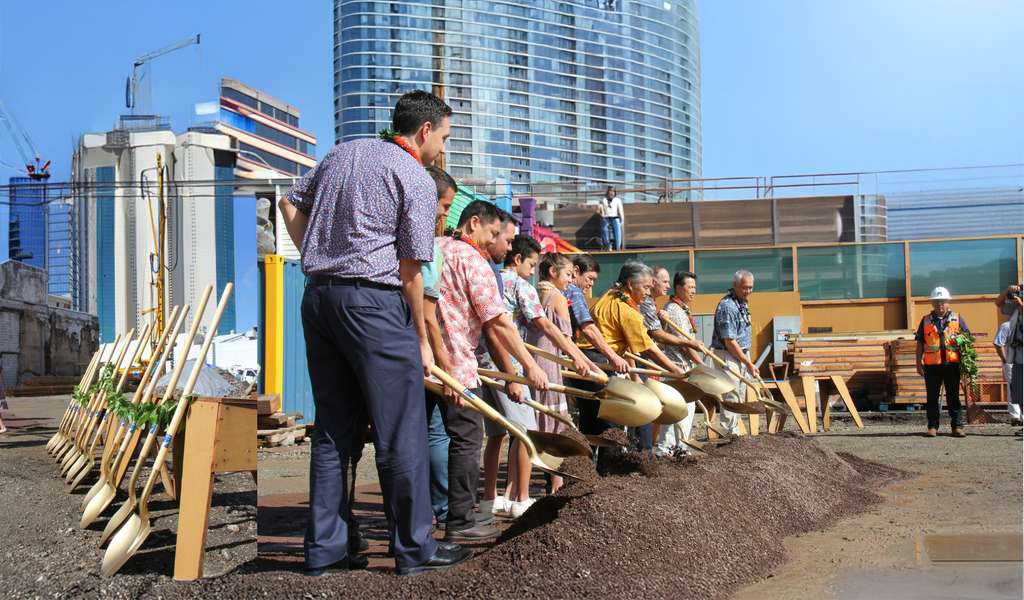
When Governor Ige took office, there was a notable absence of a cohesive, coordinated state plan to address affordable housing. Housing production had stagnated, likely due to a combination of factors including unrealistic government approval processes and insufficient legislative interest in funding housing initiatives. Also, a significant and expanding homelessness crisis exacerbated the housing challenge. The number of tents in the Kaka’ako Waterfront area, for example, nearly doubled in a short period before the administration took office, highlighting an urgent need for action.
The Governor’s response
The Ige administration achieved significant milestones in affordable housing, employing a multi-faceted leadership strategy that prioritized collaboration, financial investment, and regulatory reform.
Affordable Housing Accomplishments
Housing for the Middle Class and General Population
The Ige administration's efforts in affordable housing can be categorized by their impact on the general population and those experiencing homelessness:
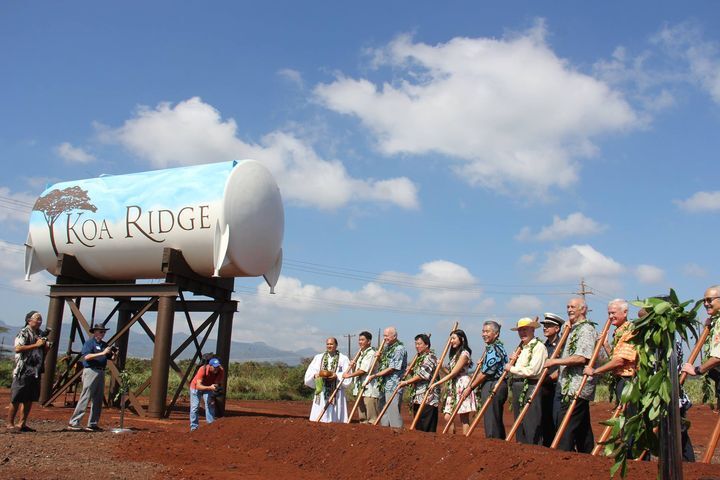
The administration set and achieved an initial goal of building 10,000 new housing units by 2020, and ultimately exceeded this goal in subsequent years, completing 15,000 units statewide by the end of the term. Of these, 9,400 were designated as affordable. Between 2015 and 2022, 9,489 affordable housing units were produced, accounting for 63% of the total housing production. Housing.pdf; 22-12-02 Comprehensive Gov. Ige Term Report (22-12–02 Rpt)
In 2020 and 2021, the Hawaiʻi Housing Finance and Development Corporation (HHFDC) was involved in 29 housing construction projects statewide, projected to deliver an additional 2,950 units. 22-12-02 Rpt.
Government processes were streamlined by revising administrative rules across various land use and housing agencies. The environmental review process was updated to include exceptions for affordable housing, and historic preservation processes were revised to reduce project delays. 22-12-02 Rpt.
Affordable housing tax incentives were revised to be more attractive4. The state legislature infused $300 million into HHFDC’s Rental Housing Revolving Fund and an additional $45 million into the Dwelling Unit Revolving Fund Housing.
The Ige administration's efforts in affordable housing can be categorized by their impact on the general population and those experiencing homelessness.
Necessary infrastructure improvements were funded across all counties to stimulate development, and large tracts of state lands were made available to private developers for affordable communities 22-12-02 Rpt.
Approximately 1,050 units were produced between 2015 and 2017, with 92% being rentals to address the significant demand for rental housing 22-12-02 Rpt.
The focus for Kaka‘ako development shifted from primarily luxury housing to include more affordable housing, with 15,000 affordable units already completed and more in the pipeline. Housing.pdf . “Kaka’ako used to be 90% luxury housing, not built for local residents. We refocused the issue and improved the system to develop more affordable housing, such as Hale Kewalo, Keauhou Lane and Artspace Lofts, in that area.” Capitol Connection Nov/Dec 2022
In 2019, the state sold its aging rental apartment portfolio to a private entity, saving millions in maintenance costs 22-12-02 Rpt.
Leaders in Affordable Housing
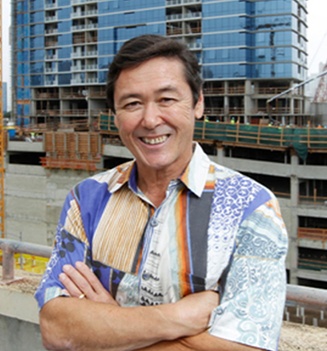
"We want to help local residents. The governor has listened, responded and taken action to provide more tools and means of financing to create more housing."

Commenting on the housing progress, Christine Camp noted, "Think about all the housing built statewide in the past eight years. That's leadership.” 22-12-02 Rpt.
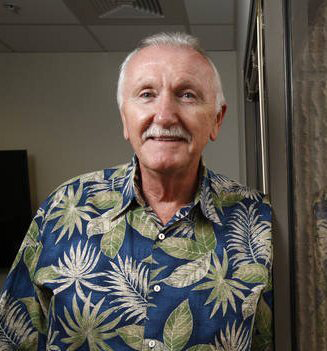
Carney highlighted the administration's impact, stating, "With streamlined policies, increased funding and improved financing tools, the Ige administration and housing partners have built more than 9,000 housing units over the past eight years — some 9,400 of which are affordable— with more units in the pipeline. The state also is making a historic $600 million investment for Hawaiian Home Lands beneficiaries and has reduced family homelessness by 53%." 22-12-02 Rpt.
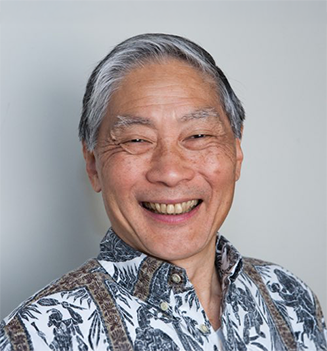
"This governor has put the emphasis on affordable housing for working families. In the past, it was either at the very low or very high end. Now we're working hard to ramp up as many low- and moderate-income units as possible."

With new board members, HCDA focused on increasing affordable housing, supporting rental units in Honolulu through public-private partnerships
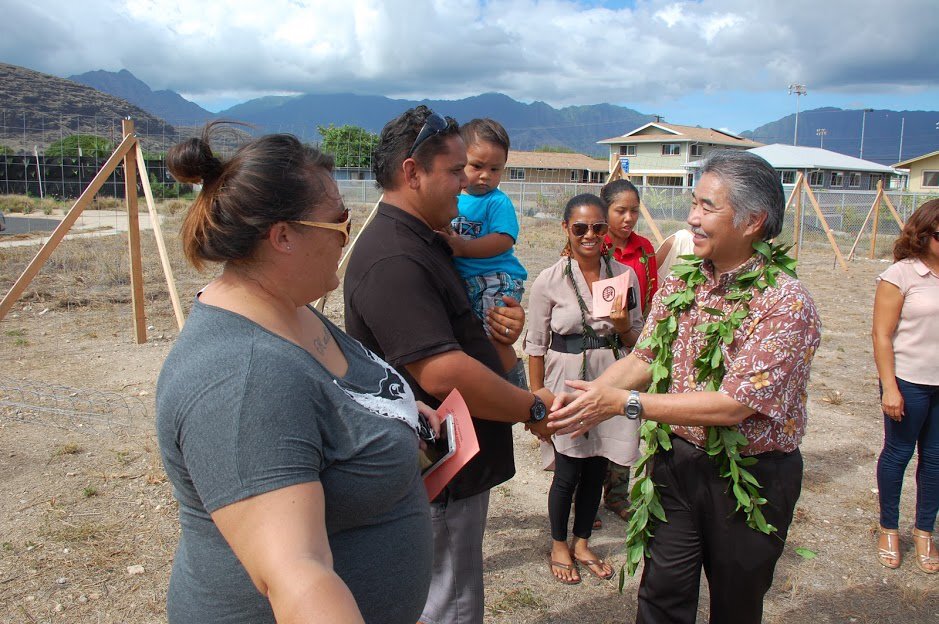
Governor Ige's leadership strategy for providing affordable housing was multi-faceted, focusing on increasing the supply of affordable homes, including rentals. Key components included:
Governor Ige quickly made affordable housing a top priority and set clear, ambitious production targets like 10,000 new units by 2020.
The administration regularly brought together public and private sector housing stakeholders, including landowners, developers, and housing advocates, to identify and overcome roadblocks.
Ige consistently secured substantial capital infusions from the Legislature into the state's affordable housing funds.
He initiated revisions to affordable housing tax incentives and streamlined government approval processes by updating administrative rules across land use and housing agencies. This included making environmental review processes more efficient for affordable housing projects.
The administration funded infrastructure improvements in every county and made state lands available for private development to stimulate affordable housing construction.
For homelessness, the strategy was based on the "Housing First" principle and the 'Ohana Nui approach, which focused on a multigenerational investment in families and addressing homelessness through affordable housing, health and human services, and public safety initiatives. Executive Summary on Homelessness.
During crises like the COVID-19 pandemic, the administration implemented significant relief programs such as the RRHAP to prevent housing instability.
Housing for the Homeless
The administration aimed to implement a "Housing First" system by 2020, with a goal of achieving "Functional Zero" homelessness, meaning sufficient housing for all homeless individuals and a reduction of unsheltered people and encampments. Executive Summary on Homelessness.
From 2016 to 2022, family homelessness decreased by 36%, and individual homelessness decreased by 24% 22-12-02 Rpt.
The state's framework to address homelessness is based on the 'Ohana Nui approach, a multigenerational strategy that invests in children and families to improve health, education, employment, and other outcomes, integrated into state programs, policies, and philosophies Executive Summary on Homelessness.
The 'Ohana Zones pilot project was extended until June 2026, with an additional $15 million in funding 22-12-02 Rpt.
A historic $600 million investment was made for Hawaiian Home Lands beneficiaries, with 9,400 units in the pipeline 22-12-02 Rpt.
During the COVID-19 pandemic, this program provided over $416 million in rental and mortgage relief to 13,663 renters and homeowners to prevent evictions. Forbes magazine recognized Hawaiʻi's program as a model for other states 22-12-02 Rpt.
A new 160-bed facility at the Hawaiʻi State Hospital opened in 2022, providing healing and hope for homeless individuals with mental illness. 22-12-02 Rpt.