
Incident Leads to Major Reforms to HI-EMA Alert System
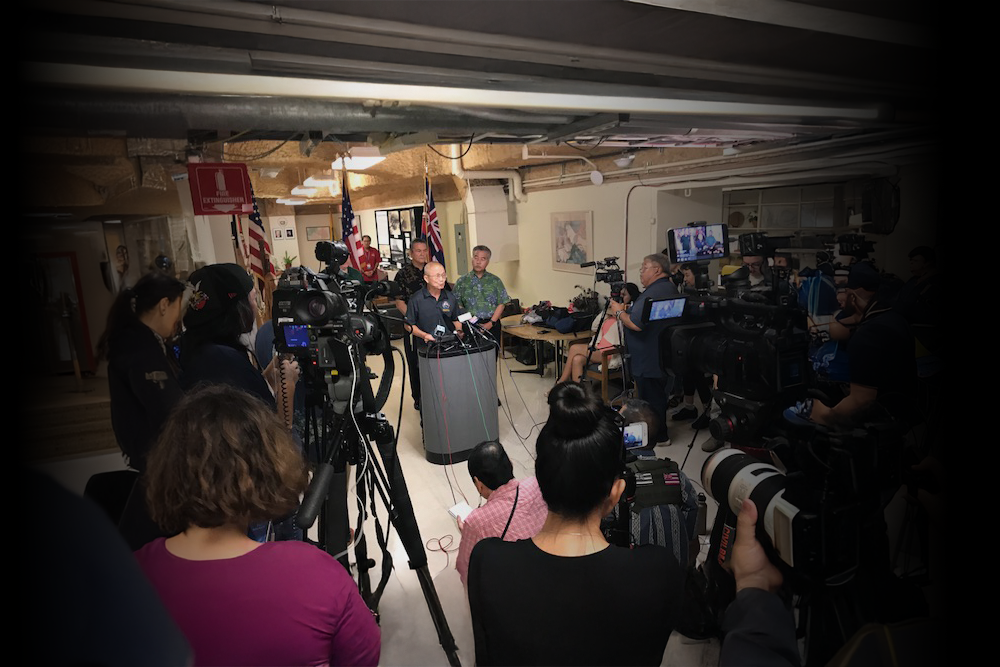
On January 13, 2018, the Hawaiʻi Emergency Management Agency’s (HI-EMA), State Warning Point erroneously activated a statewide Civil Danger Warning (CDW) ballistic missile alert through the Federal Emergency Management Agency’s Integrated Public Alert and Warning System (iPAWS). As designed, the iPAWS automatically distributed the CDW message through the Wireless Emergency Alert (WEA) to cellular phones and through the Emergency Alert System (EAS) to radio and television stations. At 8:07 a.m. local time, residents across the state received an emergency alert on their cellphones, televisions, and radios, stating: "BALLISTIC MISSILE THREAT INBOUND TO HAWAIʻI. SEEK IMMEDIATE SHELTER. THIS IS NOT A DRILL."
Although efforts were taken to notify the public that the message was in fact a false missile alert, it took HI-EMA 38 minutes to send a second message on the WEA and EAS notifying the public that the first message was a false alert. During the 38 minutes prior to the HI-EMA’s second message, the State of Hawaiʻi, Department of Defense’s Public Affairs Officer, Lt. Col. Charles Anthony began phone notification to local Hawaiʻi media notifying the station that the alert was false and distributed in error. Official messages stating that the original message was a false alert were posted at 8:20 a.m on Hawaiʻi Emergency Management Agency’s Facebook and Twitter accounts. Minutes later, Governor David Ige communications team retweeted the HI-EMA message on Twitter and posted a similar message on Facebook.
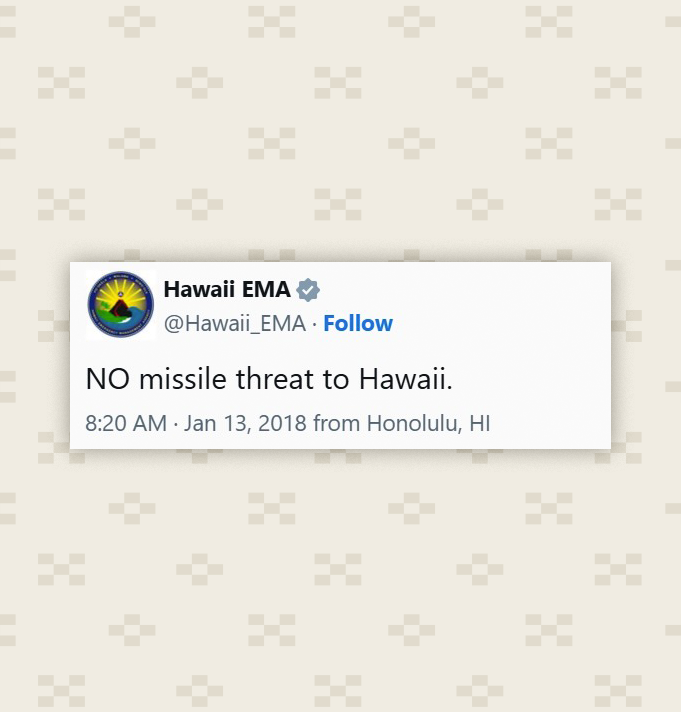
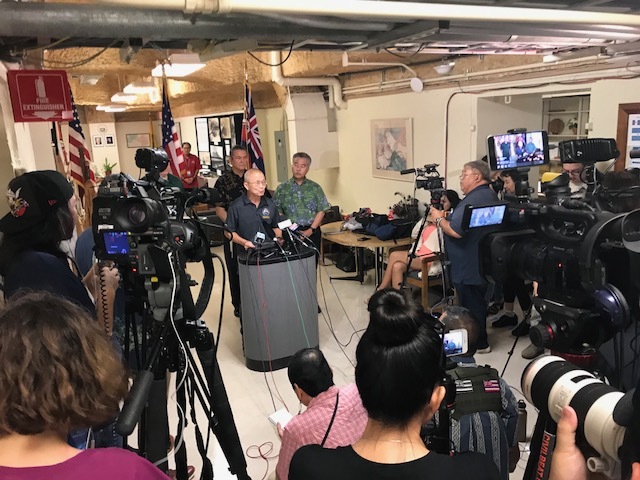
HI-EMA staff had to create an event code to distribute the follow-on false alert message during the confusion that followed because that capability was not a part of the original alert system. The failure to have systems in place in response to a false alert was the primary contributing factor for the delay and resultant internal and external communication failures.
The false missile alert and the long duration it took HI-EMA to send the WEA and EAS message confused, panicked, and angered the public. This unfortunate event severely degraded the public’s trust of HI-EMA and the systems used to notify the public of impending dangers.
Events leading up to the Incident:
In response to the ballistic missile threat stemming from geopolitical tensions with North Korea, Hawaiʻi led the way in the implementation of alert systems and procedures to increase our preparedness and keep our citizens informed of potential threats from ballistic missiles. In April 2017, HI-EMA initiated a ballistic missile preparedness campaign. A month later, Administrator Vern Miyagi provided Governor Ige and Maj. Gen. Joe Logan general information about HI-EMA’s Ballistic Missile Preparedness Campaign. In support of the Ballistic Missile Preparedness Phase I, HI-EMA initiated a robust public outreach campaign. However, the events and panic observed following the January 13, 2018 false missile alert clearly showed that the outreach campaign was limited in its success.
The Incident:
The false alert was triggered by an employee at the Hawaiʻi Emergency Management Agency (HI-EMA) during a shift change and a routine internal drill. The employee mistakenly selected a real-world alert option from a drop-down menu instead of the "test" option, and then clicked "yes" to confirm sending the alert.
The drill itself contributed to the error. The midnight shift supervisor played a recording that included the drill language "EXERCISE, EXERCISE, EXERCISE," but also mistakenly contained the text of a live ballistic missile alert, including "THIS IS NOT A DRILL." The warning officer who sent the alert claimed to believe it was a real emergency.
It took 38 minutes for HI-EMA to issue a correction message. This delay was caused by a combination of factors, including initial phone line congestion, a lack of established protocol for quickly retracting a false alarm, and officials incorrectly believing they needed approval from FEMA to issue a cancellation (which FEMA later confirmed was not required).
Impact:
The alert caused immediate and widespread panic among residents and tourists. People sought shelter in various locations, including manholes, locker rooms, and along highways. Many were terrified, crying, and preparing for what they believed was an imminent attack.
The incident led to significant criticism of HI-EMA for its outdated systems, inadequate safeguards, lack of preparation for a false alert, and the prolonged delay in issuing a correction.
It took 38 minutes for HI-EMA to issue a correction message. This delay was caused by a combination of factors, including initial phone line congestion, a lack of established protocol for quickly retracting a false alarm, and officials incorrectly believing they needed approval from FEMA to issue a cancellation (which FEMA later confirmed was not required).
Maj. Gen Arthur “Joe” Logan appointed former Hawaiʻi Army National Guard commander Bruce E. Oliveira to investigate the events that resulted in the false alert being sent out. In his report, published January 30, Oliveira identified "insufficient management controls, poor computer software design, and human factors" for the incident.
By Executive Order 18-01, the Governor of Hawaiʻi appointed Brig. Gen. Kenneth Hara to lead the effort to examine all relevant and available information. He in turn formed the Core Team consisting of seven members. The Core Team members supported EO 18-01 requirements. They were selected to create diverse representation with experience and background in state government, county government, emergency management, interoperable communications, complex problem solving, public outreach, and strategic communication. The Core Team received guidance from the governor to conduct all activities in a transparent, unbiased, and comprehensive manner. The Core Team conducted group sessions, focused interviews, preparedness surveys, researched and assessed gaps and vulnerabilities as well as developed actions/recommendations/options for preparedness improvements. The team devoted over 700 hours conducting interviews, researching, capturing observations, and developing recommendations.
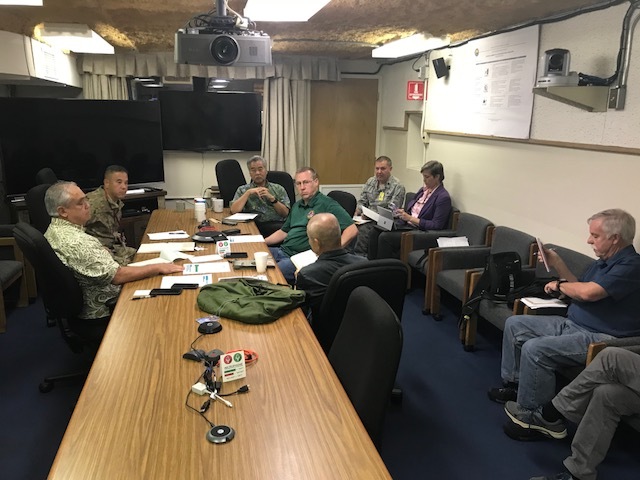
Executive Order 18-01 directed the following tasks
Review the current emergency response system, including notifications and warnings, and make recommendations for improvement with such review to include:
Observations
HI-EMA lacks a comprehensive Strategic Plan that provides vision and direction, prioritizes energy and resources, facilitates decision making, and identifies goals and objectives.
HI-EMA began their Ballistic Missile Preparedness testing and internal drills prior to publishing an annex to the 2017 State of Hawaiʻi, Emergency Operations Base Plan to addresses Chemical, Biological, Radiological, and Nuclear (CBRN) threats.
Hawaiʻi Revised Statutes §127A-7 mandates that “. . . the SWP shall be continually staffed by the agency to monitor warning systems and devices and shall have the ability to provide timely warning and notification to government officials, county warning points and emergency operations centers and, when directed, the general public.” There is a misconception that the Governor of the State of Hawaiʻi and other elected officials are primarily responsible for timely warning and notification. Accordingly, several people including elected officials attempted to get the false missile alert message to the public – through multiple means – as soon as possible.
Some managers within HI-EMA did not follow proper procedures to deal with unsatisfactory performance within the organization. The lack of quality management in personnel led to subpar performance which was a contributing factor to the false missile alert.
Many cellular/wireless phones did not receive a wireless emergency alert (WEA) on January 13, 2018.
Citizens in certain locations did not have access to WEA or other alert notification services and were unaware of the missile alert.
Key government personnel were unable to communicate with each other on January 13, 2018 because wireless networks were saturated.
Wireless broadband service is limited in Diamond Head Crater which hampers media’s capability to broadcast live.
ETS reports that HI-EMA (ready.hawaii.gov) website logged over 40,000 hits within the first three minutes of the missile alert. As a result, HI-EMA servers crashed five minutes later.
On August 11, 2015 Governor Ige signed Administrative Directive No. 15-01 (AD 15-01) that directed minimum emergency management requirements for each department and agency in the executive branch. AD 15-01 required that all departments and agencies conduct an analysis of the department’s functions and identify essential functions following a disaster; develop a Departmental Emergency Operations Plan (DEOP); develop/update Department Continuity of Operations Plan (COOP); designate an Emergency Management Officer; assign State Emergency Response Team (SERT) members; Designate Emergency Workers; and participate in emergency management training and exercises.
Based on systemic analysis, Hawaiʻi requires additional long-term solutions and programs that require revisions to the Hawaiʻi Revised Statutes and additional funding. HI-EMA’s operating budget in the preceding years had been down-trending/flat lined while the operational requirements consistently increased.
Operational requirements
Total HI-EMA budget saw slight decrease over the last 2 years.
No projects and programs to mitigate known capability gaps had been approved.
Additionally, the Federal Communications Commission (FCC) and the Hawaiʻi House of Representatives launched investigations. These investigations revealed issues such as:
- Insufficient management controls.
- Poor computer software design (a cluttered interface).
- Lack of a two-person verification requirement for sending alerts.
- Absence of a pre-programmed "false alarm" or "all clear" message template.
- Concerns about the employee who sent the alert, who reportedly had a history of confusing drills with real events.
- Psychological Effects: Studies, including one analyzing over a million tweets, showed that the anxiety and fear experienced during the 38-minute period lingered for days for many people, highlighting the potential for psychological trauma even from false alarms.
Changes Implemented: In response to the incident, HI-EMA made several changes, including:
- Implementing a two-person verification system for sending alerts.
- Creating a clear "false alarm" cancellation message.
- Updating software interfaces to be less prone to human error.
- Revising training and protocols for emergency alerts.
Conclusion:
The 2018 Hawaiʻi false missile alert served as a stark reminder of the critical importance of robust, clear, and rapidly rectifiable emergency communication systems in an age of heightened global tensions.